AbilityBridge is the operating system for supported employment — built on the floor of a real workplace by a neurodivergent job coach, alongside the neurodivergent young adults the programme serves. It makes the working day clearer, calmer and easier to navigate — without asking people to become someone they are not.
Supported employment doesn't fit neatly into conventional education, social care or workplace systems. A working day fragments across attendance, check-ins, mood, breaks, tasks, mentor visits, employer conversations, safeguarding moments and end-of-day reflection.
For neurodivergent young adults, those same working days can also involve something less visible: interpreting unwritten rules, managing transitions, understanding what is expected next, deciding when to ask for help and navigating environments largely designed around neurotypical expectations. And the people supporting them are trying to hold all of that together.
Before AbilityBridge, much of the programme lived across spreadsheets, WhatsApp groups, printed checklists and the job coach's memory. The small, daily evidence that matters most — what helped, what changed, where support was needed and where independence grew — was the information most likely to disappear.
AbilityBridge grew out of that gap. It was built by a neurodivergent job coach working alongside neurodivergent young adults inside a live supported internship at Amazon LBA4 — not from assumptions about what people needed, but from watching real working days unfold, listening to interns, mentors and employers, getting things wrong, changing them, and trying again the next morning. That is still how we build it.
AbilityBridge OS brings the people, working day, learning, workplace support and programme oversight of supported employment together in one platform. Each part is designed to reduce unnecessary friction: fewer things to remember, clearer next steps, more visible support and better evidence of the progress happening every day. The goal isn't to make a neurodivergent person work more like everybody else. It's to make the programme around them work better.
AbilityBridge OS helps the people supporting employment. My Work Buddy helps the person doing the job.
A guided seven-milestone working-day flow — check-in, mood, breaks, tasks, end shift, reflection — designed for cognitive accessibility and built around real workplace rhythms. Not a productivity app. A working day.
Process-specific visual task guides that interns follow independently. Coaches assign, mentors endorse, the library compounds with every cohort. Real workplace processes, in pictures, on the device the intern already has in their hand.
Plan the classroom and the workplace as one programme. Maths, English and employability woven through the placement, not bolted on. Weekly themes, daily anchors, and the audit trail funders are looking for.
Job Coach, Mentor, Employer Programme Lead, Director — each with the data they actually need, nothing they don't. Attendance, support flags, employer conversations, progression at a glance.
Not an afterthought, not a separate system. Logged concerns with named designated leads, escalation routes, and an audit trail for inspection, SiQAF, and the moments that matter.
A pocket-sized companion for the workday.
Small prompts. Big days.
My Work Buddy brings helpful prompts, step-by-step support and encouragement to the working day — shaped through real working days with neurodivergent young adults.
AbilityBridge OS sits around that experience, helping job coaches, employers and providers coordinate support without making the individual carry the complexity.
One ecosystem, two jobs. AbilityBridge is the trusted platform, tools and people. My Work Buddy puts that support in the pocket of every young person, every day.

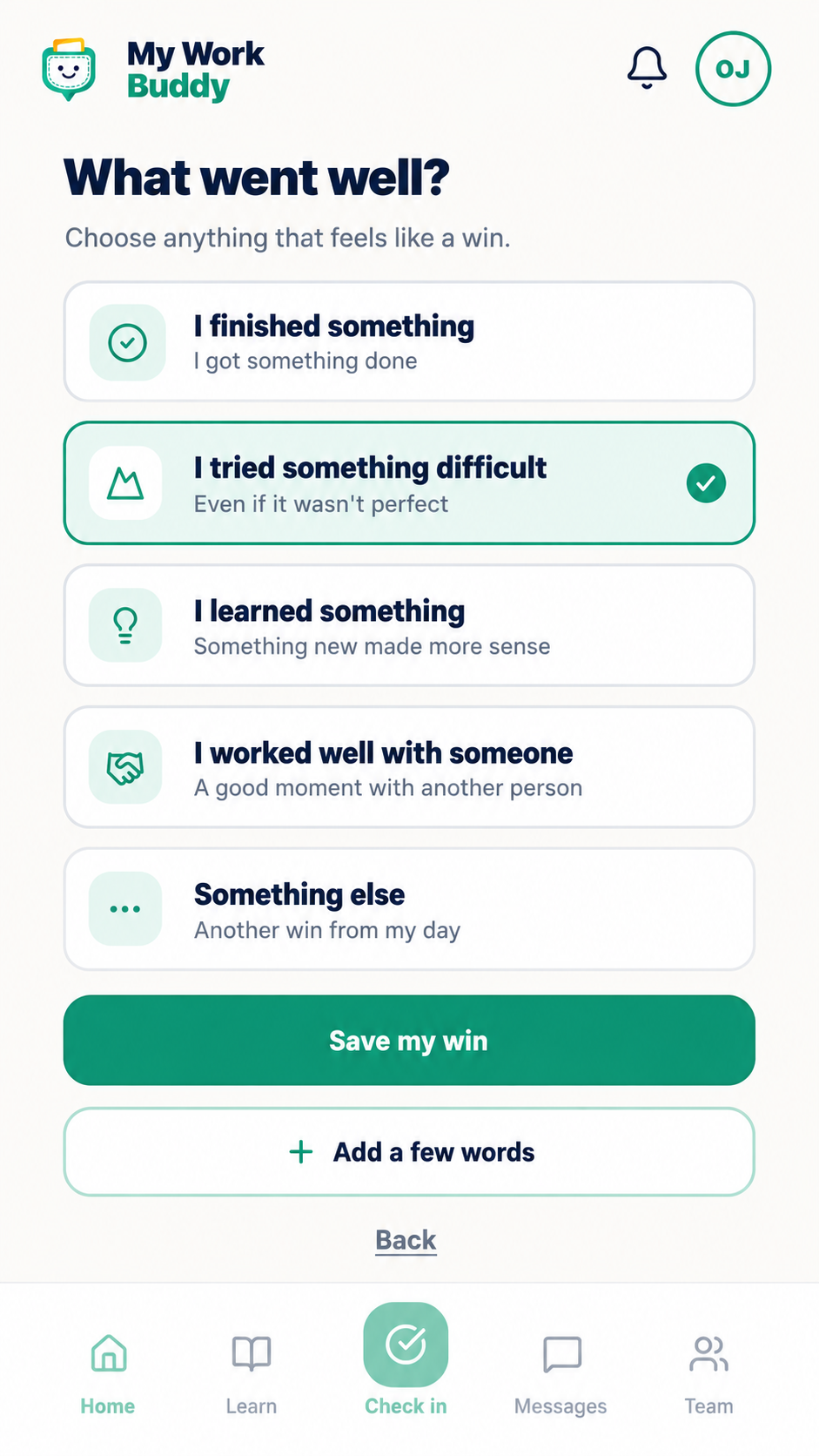
AbilityBridge is shaped by lived neurodivergent experience, frontline job coaching and the voices of the young adults using it every day.
This isn't a concept platform or a polished demo environment. We'll show you AbilityBridge working against a real supported employment programme — including the decisions we've made, the things we've changed and the parts we're still improving.
If you're supporting neurodivergent young adults into real workplaces — through supported internships or another supported employment model — we'd love to show you what we've learned.
No sales theatre. No long presentation. Just the product, the programme and the story behind it.

